
Model portfolio operations at scale expose a problem that’s easy to overlook when you’re managing a handful of strategies — but impossible to ignore when you’re running dozens or hundreds of variants across client segments.
The reality of how most ops teams manage multi-asset model portfolios today looks something like this:
→ Equities: One system → Fixed income: Different system (or spreadsheets) → Alternatives: Often manual tracking → Corporate actions: Another tool → Portfolio optimization: Separate tool again — typically one approach for equity, another for fixed income → Compliance monitoring: Yet another system → Rebalancing: Manual coordination across all of the above
For a single model, this is manageable. For dozens or hundreds of variants across client segments? The complexity multiplies fast.
Common Challenges in Model Portfolio Operations at Scale
Maintaining consistency across disconnected systems is one thing. But the compounding effect of running model portfolio operations at scale across fragmented infrastructure creates a different category of problem entirely:
- Reconciling data between platforms consumes time that should go toward analysis
- Optimization logic that differs by asset class, maintained in separate tools, with no unified view of how constraints interact across the whole portfolio
- Version control breaks down when methodologies change mid-cycle
- Manual touchpoints that work fine at low volume don’t survive growth
- Audit trails become difficult to maintain across multiple tools
Most of these tools work well for what they were originally designed to do. The challenge is integrating them efficiently when the number of models, variants, and client segments grows.
The scaling inflection point
There’s typically a moment where the patchwork stops working. A new client segment requires a variant. A methodology change needs to cascade across fifty models. A corporate action hits during a rebalance window. Each of these is manageable in isolation. Together, under time pressure, across systems that weren’t designed to talk to each other, they become a genuine operational risk.
A recent McKinsey report found that operations headcount across asset managers grew by 30% between 2020 and 2024 — a reflection of firms adding people to manage complexity rather than resolving the underlying infrastructure problem.
The firms that navigate this well tend to have either invested heavily in custom integration work — or started asking earlier whether their infrastructure was built for the scale they were heading toward.
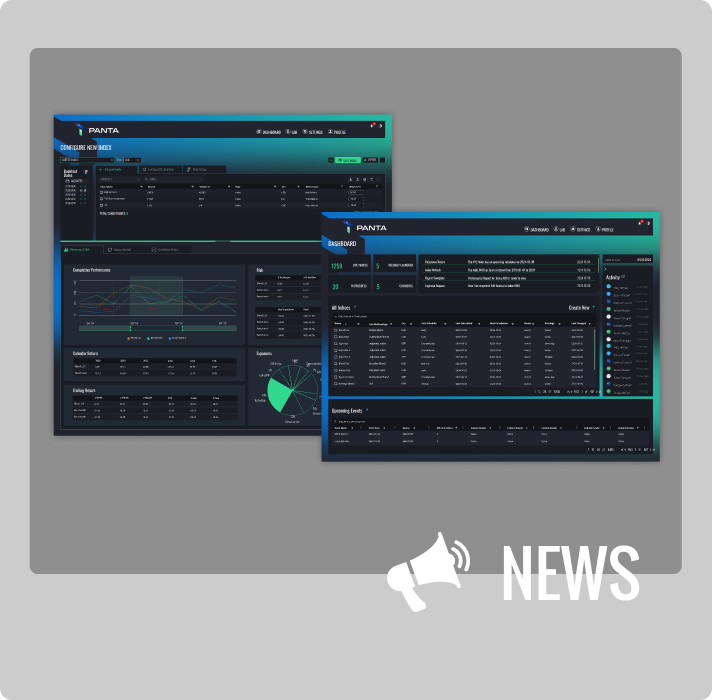
At Panta, we’re building a platform designed specifically for model portfolio operations at scale — consolidating methodology design, optimization, corporate action handling, and analytics into a single environment. If this resonates with challenges your team is facing, we’d love to hear from you.
How many systems does your ops team use for a typical balanced portfolio?