
Index providers seldom change their habits quickly. That’s part of their charm. They publish methodologies, debate tweaks at committee meetings, and maintain systems that run precisely the way they did last year — and the year before that. Stability is a feature, not a flaw.
Every so often, though, the industry does drift in a new direction…
Where the Market Is Moving
For most of the indexing era, competition was defined largely by category leadership. Whether it’s the Russell 2000 for US Small cap, MSCI EM for Emerging Markets or the Euro Stoxx 50 for the Eurozone (particularly via futures), once established these category leaders became exceptionally hard to dislodge. When a new asset class or theme became indexable, providers would race to launch, and eventually one or two benchmarks would settle in as the recognised standards.
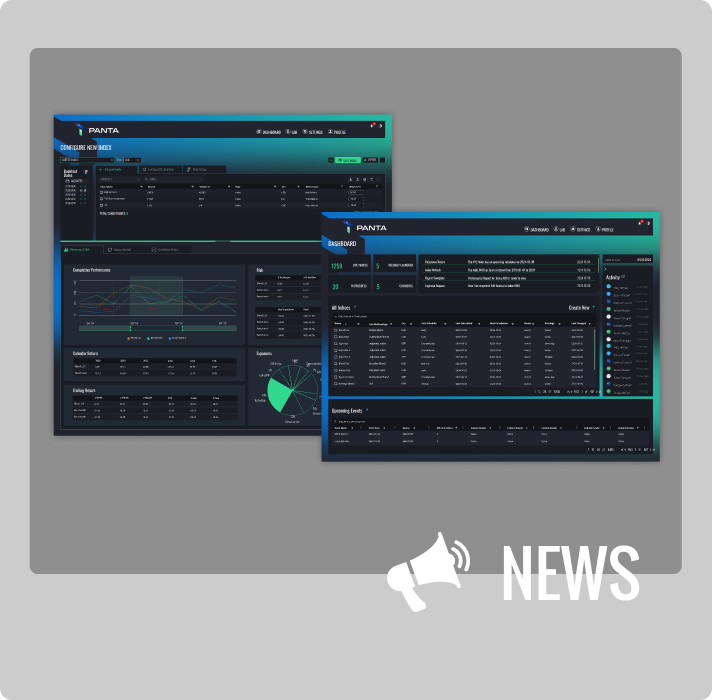
Within the last few years however, a drip feed of announcements has pointed to a new area of competition amongst providers. MSCI’s acquisition of the Foxberry F9 platform in 2024 marked a clear signal, and in their 2024 annual report they described index customisation “the next frontier of indexing”. S&P recently released the SPICE platform for self-service index design and experimentation. Newer players like Merqube rolled out the Garage this year. Each of these platforms enables clients to take an existing index as a starting universe, adjust selection rules or weighting parameters, and immediately see backtests and analytics based on their changes.
To most people, these launches were easy to overlook. Inside the business, it’s significant: if these tools gain wide adoption, custom index design is no longer constrained by how many quants or product people a provider can throw at a request. Clients who are confident to experiment on their own can now generate far more ideas — and far more indices — than the old model ever allowed.
The Drivers
It’s not hard to see the motivation. Asset managers want to test ideas quickly. Providers want to support more of those ideas without doubling their headcount. And quants, as a general rule, do not enjoy building the same backtest logic for the fifteenth variation of a low-volatility strategy.
Software shortens cycles. It handles the repetitive work. It lets clients experiment on their own time. And, viewed from a commercial perspective, it keeps them within the provider’s orbit. That may not be the official reason these tools are on the agenda, but it certainly isn’t a drawback.
Additionally, once software is in place, it tends to spread. It may reach parts of the client organisation—portfolio managers, risk teams, and others—who previously stayed outside the index design conversation.
What improves — and what complicates
For those needing new indexes created, most of this is good news. They don’t have to wait for a provider’s queue. They can explore several approaches before involving anyone else. Smaller firms, especially, gain access to capabilities that may in the past have been denied to them.
But software introduces new kinds of friction. Each provider’s tool behaves differently, and will inevitably restrict to their own methodologies & data. A draft index methodology built in one system may need to be rebuilt from scratch in another. And when a client arrives at a meeting with a fully formed prototype, the provider’s role risks becoming more reactive than collaborative.
Looking ahead
Once index design lives inside structured environments rather than email chains, the obvious question is what happens next. Where AI may fit inside indexing investment workflows should perhaps be the subject of another piece entirely, but it’s certainly possible to imagine LLMs becoming the scalable quant analyst of the future — always available to run simulations, explore variations, and support design decisions.
We’re not there yet, but the groundwork in terms of tools, structure and standardised workflows, is being laid now.
Where this leaves the industry
The arrival of design tools signals that index providers see customisation as a key driver of future growth. Some will lean heavily into these platforms. Others will offer lighter versions or partner with more neutral platforms. A few will stick with the traditional model and rely on their relationships.
The trend is easy enough to see. Index design is moving from conversations into systems and from one-off scripts into platforms. This has the potential to open the door for far more custom index activity than the industry has previously been able to support.
To find out more about how PANTA is shaping this change – get in touch with us here