In June, SpaceX’s IPO raised approximately $75 billion and valued the company at around $1.77 trillion. It grabbed the world’s attention but has left the investment industry divided. We explain why.
Fast-track inclusion, price volatility and a unique float
Ahead of the listing, several index providers relaxed their entry rules to accelerate the stock’s inclusion, while others kept their seasoning and profitability requirements, effectively excluding SpaceX until at least next year.
The stock debuted at an IPO price of $135 on 12th June 2026, finishing the day just above $160. It reached $225 by the end of the following week; however, hopes of “reaching the moon” were soon dashed. By late July, the stock had plummeted below $110, and it remains at a similar level at the time of writing.
This Thursday (6th August 2026), an initial lock-up expiration will lift restrictions on up to 911.5 million shares. This will double the current public float, which was well below the typical 10% requirement for most indices.
The case for and against inclusion
Proponents argue it reflects economic reality: a company this large is already a meaningful part of the investable market, so recognising that immediately arguably makes an index more representative, not less. It can also smooth out the price dislocation that can occur when a huge, untracked stock’s float is added all at once.
Critics, however, raise several concerns:
- Forced buying effectively makes index investors (including pension funds) price-takers on hype-driven demand;
- Indices were once reserved for seasoned businesses. For example, it took Tesla over a decade to join the S&P500, with a net profit of $104 million;
- And a deeper question of what “passive” means when rules are being adapted for specific issuers.
Implications for index investing
The bigger story may be what this reveals about index construction generally. Two funds both marketed as ‘US large-cap’ may offer materially different exposures and performance based on which benchmark they follow.
This is prompting a genuine rethink among asset managers: if rules can be rewritten around a specific listing, and providers reach different conclusions, benchmark selection becomes a more active decision than the “passive” label suggests. It raises questions about how much influence investment bankers should have over eligibility rules, and whether some providers are now weighing investor hype more heavily than fundamentals.
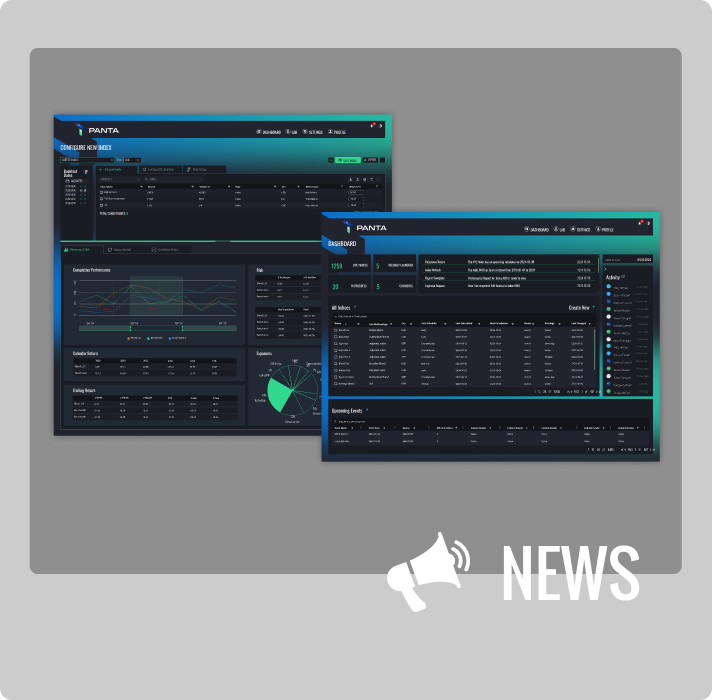
Some are pointing to custom benchmarks as a potential solution. These offer asset managers and owners greater control over their indices – from universe selection to sector exclusions and component weightings. And with the advent of low-code platforms like PANTA Lab, building and testing custom indices can take as little as a few hours.
Summary
SpaceX has caused a stir among passive investors. However, we don’t expect a wholesale move away from traditional benchmarks – their predictability and transparency remain central to passive’s value proposition. But with several other mega-IPOs expected in the coming years, critics of ‘fast entry’ and wider index governance may begin to grow in voice.
What’s your view? Add your vote on our LinkedIn poll or contact us